A practical safari safety guide covering wildlife, road travel, health precautions and visitor safety in Kruger National Park.
Is Kruger National Park Safe for Tourists?
Yes. Kruger National Park is considered one of the safest safari destinations in Africa when visitors follow park regulations. Millions of local and international travellers visit the park every year without incident.
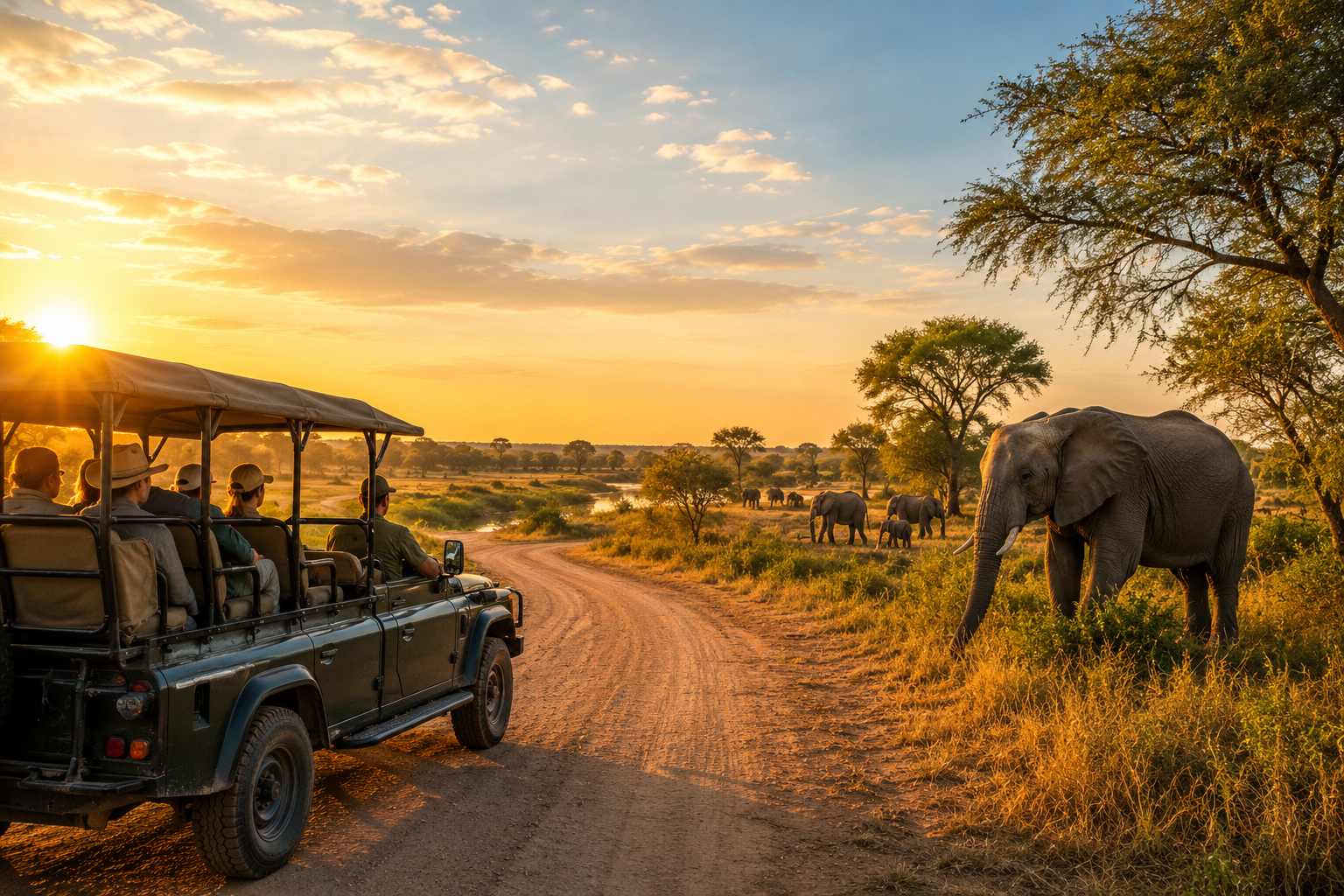
The greatest risks inside the park are not crime but wildlife, speeding, and ignoring safety rules. Visitors should remain inside their vehicles except in designated areas such as rest camps, picnic sites and viewpoints where it is specifically permitted.
Guided safaris provide an additional level of safety because experienced guides understand animal behaviour, road conditions and park regulations. Whether you choose a guided safari or a self-drive adventure, following the rules ensures a safe and enjoyable experience.
Top Kruger Safety Tips
Stay Inside Your Vehicle
Never leave your vehicle except in designated areas.
Keep a Safe Distance
Never approach elephants, lions, buffalo or other wildlife.
Obey Speed Limits
Speed limits protect both visitors and wildlife.
Follow Park Rules
Park regulations are designed for your safety.
Kruger National Park Map
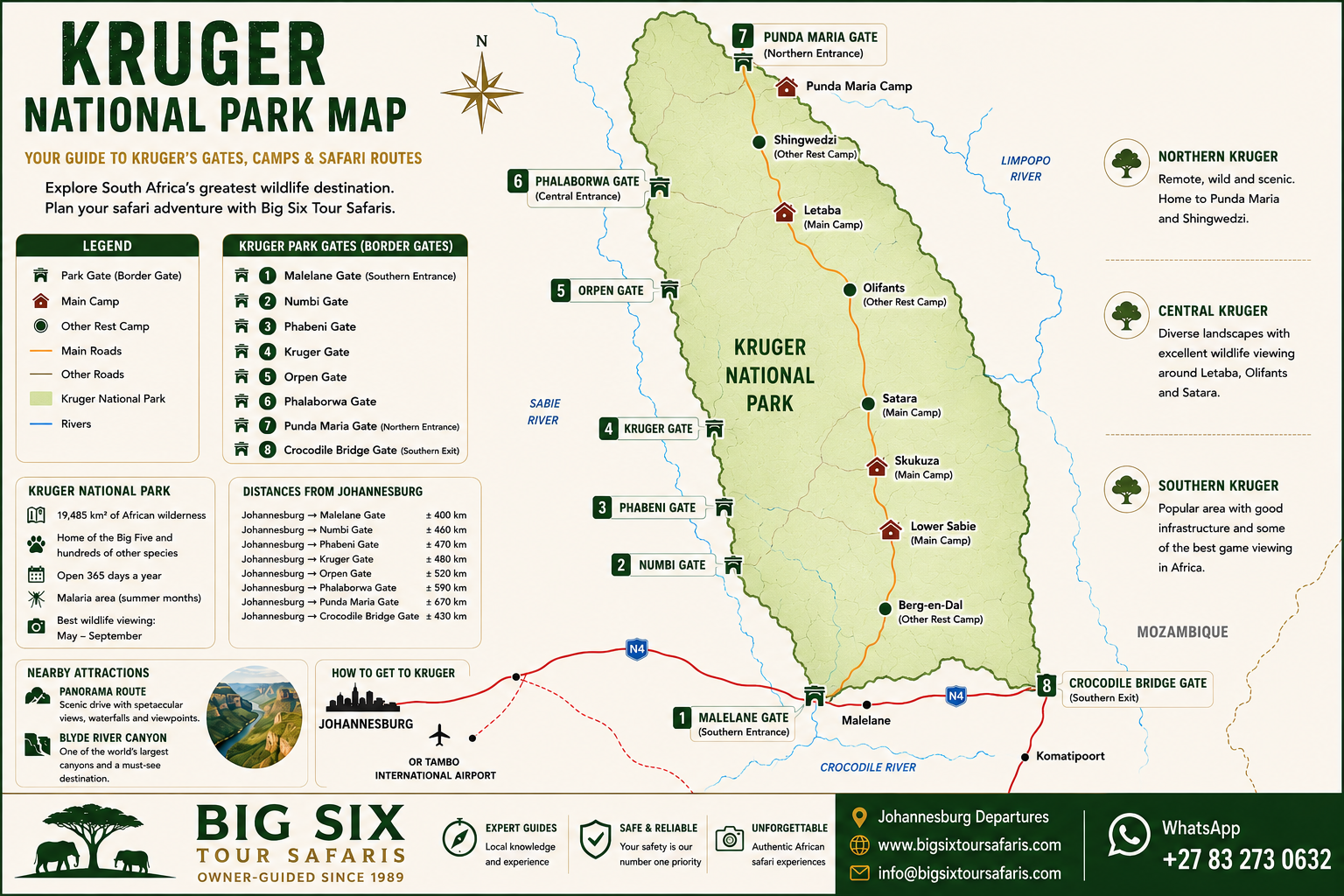
Kruger National Park stretches nearly 350 km from south to north and is one of Africa's largest wildlife reserves. The map below shows the main gates, rest camps and safari routes used by visitors travelling from Johannesburg.
Wildlife Safety Rules in Kruger National Park
Kruger National Park is home to the Big Five – lion, leopard, elephant, rhino and buffalo – as well as many other wild animals. These animals are not tame and should always be treated with respect.
The vast majority of wildlife incidents occur when visitors ignore park regulations. Following a few simple rules will help ensure a safe and unforgettable safari experience.
🦁 Never Leave Your Vehicle
Outside designated areas, visitors must remain inside their vehicles at all times. Predators can be difficult to spot and may be closer than they appear.
🐘 Give Animals Space
Do not block an animal's path. If elephants, buffalo or other animals approach your vehicle, remain calm and allow them room to move freely.
📸 Stay Inside for Photos
Never climb onto your vehicle or lean dangerously outside windows to take photographs.
🚫 Do Not Feed Wildlife
Feeding animals changes their natural behaviour and can create dangerous situations for both visitors and wildlife.
Road Safety in Kruger National Park
Kruger National Park has an extensive network of tarred and gravel roads. Driving conditions are generally good, but visitors should always remain alert.
✓ Obey all speed limits.
✓ Watch for animals crossing the road unexpectedly.
✓ Allow extra travel time between camps.
✓ Avoid driving after gate closing times.
✓ Keep enough fuel for your planned route.
✓ Be especially cautious on gravel roads.
Most visitors find driving in Kruger straightforward and enjoyable, but patience and awareness are essential.
Malaria and Health Precautions
Kruger National Park is situated in a malaria-risk area, especially during the warmer and wetter summer months. Visitors should speak to a doctor, pharmacist or travel clinic before travelling.
Many travellers visit Kruger safely every year by using mosquito repellent, wearing long sleeves in the evening and following medical advice about malaria prevention.
What to Pack
✓ Mosquito repellent
✓ Sunscreen and hat
✓ Personal medication
✓ Light long-sleeve clothing
✓ Reusable water bottle
Safari Health Tip
Early morning and late afternoon game drives can be cool, while midday temperatures can be hot. Dress in layers and drink enough water throughout the day.
Self-Drive vs Guided Safari Safety
Both self-drive and guided safaris are safe ways to explore Kruger National Park. The best option depends on your experience, confidence and the type of safari experience you are looking for.
Self-Drive Safari
✓ Freedom to travel at your own pace
✓ Excellent road network
✓ Lower overall cost
✓ Ideal for experienced travellers
✓ Requires understanding of park rules
Guided Safari
✓ Professional guide handles navigation
✓ Greater wildlife spotting opportunities
✓ Local knowledge and safety advice
✓ Relax and enjoy the safari experience
✓ Ideal for first-time visitors
Big Six Tour Safaris Recommendation
If this is your first visit to South Africa, a guided safari offers the safest and most rewarding experience. A professional guide understands animal behaviour, road conditions and the best wildlife viewing areas, helping guests maximise their time in Kruger National Park.
Frequently Asked Questions
Kruger National Park Safety FAQ
Is Kruger National Park safe for tourists?
Yes. Kruger National Park is considered one of Africa's safest safari destinations. Millions of visitors enjoy safe wildlife experiences every year by following park regulations and common-sense travel precautions.
Is Kruger National Park safe for families?
Yes. Kruger is a popular family destination. Children should always remain under adult supervision and visitors should follow all wildlife safety rules.
Can you walk around in Kruger National Park?
Visitors may only walk in designated areas such as rest camps, picnic sites and approved walking trails. Leaving your vehicle in undesignated areas is prohibited.
Is malaria a problem in Kruger?
Kruger National Park lies within a malaria-risk area. Visitors should seek medical advice before travelling and take appropriate precautions.
Is a guided safari safer than a self-drive safari?
Both options are safe. However, guided safaris provide professional local knowledge, wildlife expertise and assistance with logistics, making them particularly popular with first-time visitors.
Plan Your Safari
Experience Kruger National Park with Confidence
Join a professionally guided Kruger safari from Johannesburg and enjoy one of Africa's greatest wildlife destinations with an experienced registered tourist guide.
Professional Southern Africa safari guide with decades of overland and Kruger Park safari experience.
Kruger National Park is considered one of the safest safari destinations in Africa when visitors follow park rules and use common travel precautions. Millions of travelers visit South Africa’s famous national park safely every year.
Yes. Kruger National Park is generally very safe for tourists. Guided safaris, reputable lodges and following official park rules make safari travel safe and enjoyable for most visitors.
Wildlife Safety in Kruger National Park
Kruger is home to dangerous wild animals including lions, elephants, buffalo, rhinos and leopards. However, incidents are extremely rare when visitors follow safari safety rules.
Guests should never leave vehicles in undesignated areas and should always listen to safari guides and park staff.
Crime & Personal Safety
Crime inside Kruger National Park itself is generally low. Visitors should still avoid leaving valuables visible inside vehicles and should use normal travel awareness practices.
Using professional safari operators and organized transport greatly improves convenience and safety for international travelers.
Road Safety & Driving Conditions
Roads inside Kruger are generally well maintained, but long-distance driving in South Africa requires caution, especially at night.
Many travelers prefer guided safaris from Johannesburg because transfers, logistics and navigation are professionally managed.
Malaria & Health Precautions
Some areas around Kruger are malaria-risk regions. Travelers should consult their doctor or travel clinic before visiting and consider anti-malaria medication where recommended.
Insect repellent, long sleeves during evenings and staying hydrated are strongly recommended.